
 Donate
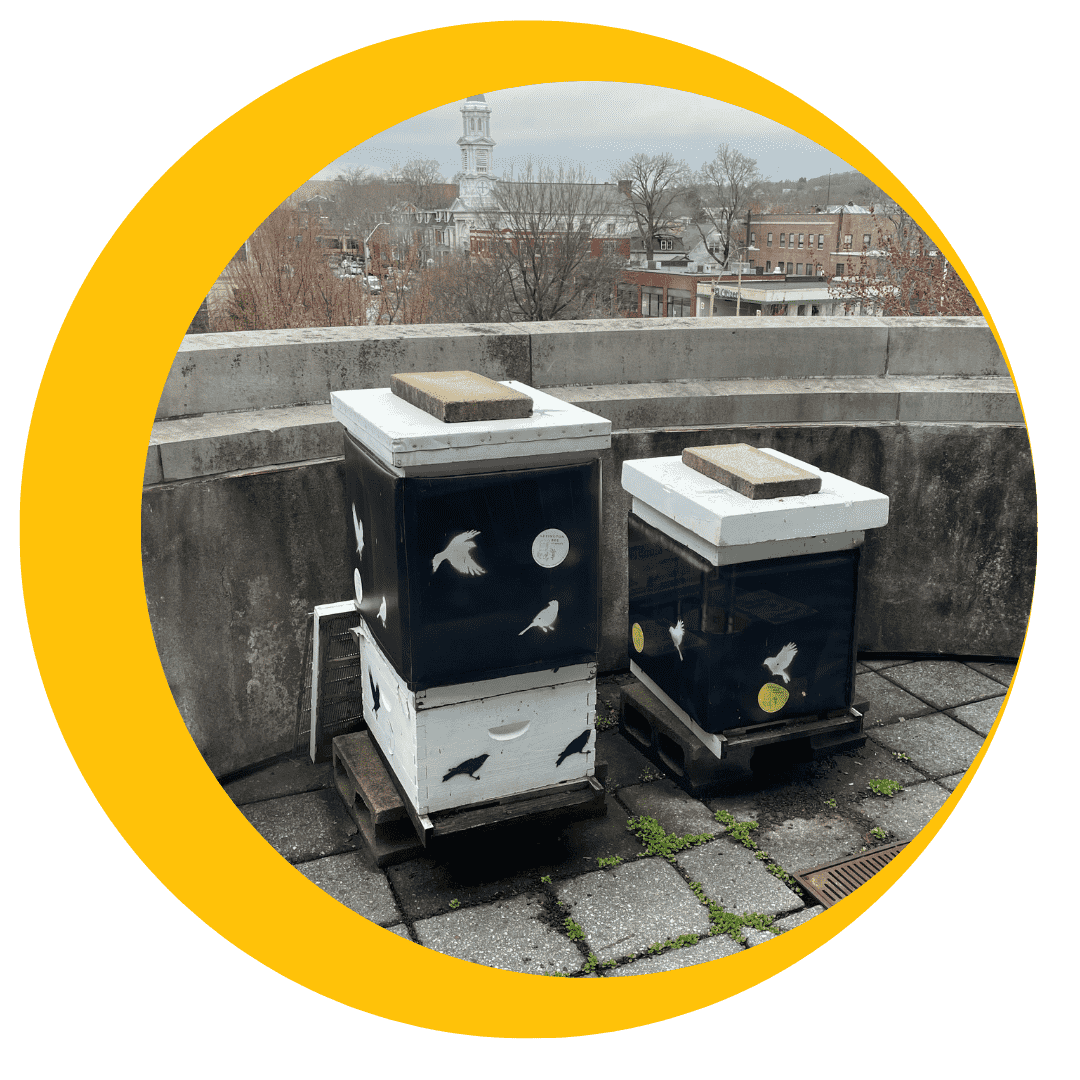
This year the Robbins Library will celebrate April as Bee Month, to acknowledge the importance that bees play to our environment and to celebrate the beehives on the third floor of the library. Join us for events for all ages throughout the month and stop by the third floor to see our busy bees anytime during open hours.
Explore some of our bee-themed programs for all ages throughout the month.
Bee Story Time
Wednesday, April 1, 10:00-10:30 a.m.,
Robbins Library
Stories, singing, and dancing. Ages 3-5. Pick up a free ticket 1/2 hour before the event.
Speculative Fiction Book Group
Monday, April 6, 7:00-8:00 p.m.
Robbins Library Community Room
We’ll be discussing The Bees by Laline Paull.
Creating Individual Resilience and Hope in the Face of the Climate Crisis
Thursday, April 9, 7:00-8:30 p.m.
Robbins Library Community Room
Join us for an interactive session and discover how we can each uniquely create positive change. Hint: the antidote to anxiety is action.
Bee-Friendly Seed Bombs
Saturday, April 11, 2:00-3:00 p.m
Fox Library Community Room
Drop in and make bee-friendly seed bombs.
Bee Story Time
Monday, April 13, 10:00-10:30 a.m. / 10:45-11:15 a.m.
Robbins Library
Stories, singing, and dancing. Ages 1-2. Pick up a free ticket 1/2 hour before the event.
Bee Craft
Wednesday, April 15, 5:30-7:00 p.m.
Fox Library
Drop in for a special bee craft.
Bee Crafternoon for ages 2-12
Friday, April 17, 2:30-4:30 p.m.
Robbins Library
Drop in and choose from three bee crafts.
Bee Story Time
Friday, April 24, 10:00-10:30 a.m.
Fox Library
Stories, singing, and dancing. Ages 1-5. Pick up a free ticket 1/2 hour before the event.
Beekeeper Talk
Wednesday, April 29, 7:00-8:00 p.m.
Robbins Library Community Room
Meet the beekeeper for the Robbins Library bees!
Plug In to Gardening to Support Native Bees, Butterflies and Birds
Thursday, April 30, 7:00-8:30 p.m.
Robbins Library Community Room
We will discuss the evolutionary history among native bees, butterflies, insects, birds, plants and fungi, and how interdependent relationships among these diverse species are necessary for their survival.
We hope to see you at the library!
