
 Donate





Cookbooks
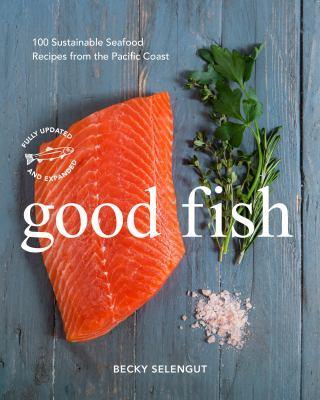
Good Fish: 100 Sustainable Seafood Recipes from the Pacific Coast by Becky Selengut
It can be intimidating to shop for seafood! Let this deliciously smart cookbook lure you to Pacific coast seafood that’s good for your health and good for the planet. Chef and seafood advocate Becky Selengut helps simplify sustainable seafood choices for consumers in this fully revised and expanded edition that now includes lingcod, Pacific cod, wahoo (or ono), mahi-mahi, and herring. From shellfish to finfish to “littlefish” (think sardines), there are 100 recipes for 20 varieties of “good fish” (plus even more recipes for salmon!). There are also cooking techniques (such as how to sear a scallop perfectly), practical tips for buying and caring for seafood, and the most current sustainability information. Seattle sommelier April Pogue provides wine pairings for each recipe. Good Fish is a bible for Pacific coast sustainable seafood.
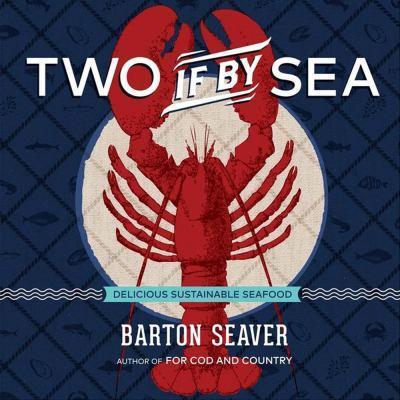
Two If By Sea: Delicious Sustainable Seafood by Barton Seaver
Barton Seaver’s second, seminal book on seafood cookery, after From Cod and Country (Sterling Epicure 2011), offers more than 150 new mouthwatering recipes, from raw bar drinks, snacks, and mains to salads, appetizers, soups, pastas, stews, entrees, sides, and sauces. Each of Seaver’s fresh-tasting, casual (and always delicious) recipes features seafood that hasn’t been overfished or caught in an environmentally destructive way–an emphasis that has made Seaver, already an acclaimed chef and restaurateur, one of the most important voices in what is now a global sustainability movement. Take a bite of his Smoked Lobster and Fennel-Carrot Salad or Poached Salmon with Pickled Chilies and Mint and you’ll understand what all the fuss is about. But don’t stop there. Try any of the soups, chowders and stews for soul satisfying good eating, and if you love fish tacos, Seaver is your man. The book is chockfull of helpful advice on buying, choosing, and making the most of your ingredients, as well as an essential guide to seafood prep and cooking techniques–a must for all seafood lovers.
Fish Tales: Stories & Recipes From Sustainable Fisheries Around the World by Bart van Olphen and Tom Kime
From the wild salmon caught in the Yukon river in Alaska, to clams harvested from the Mekong delta in Vietnam, this book tells the stories of sustainable fisheries. Each of the 9 chapters focuses on one fish and fishery, accompanied by delicious recipes by Tom Kime. Including a foreword by the MSC on the future of our oceans and its work around the globe, Fish Tales shows the importance of sustainable methods so fish remain a vital ingredient that we can all enjoy for years to come.
Other Nonfiction
Eat Like a Fish: My Adventures as a Fisherman Turned Restorative Ocean Farmer by Bren Smith
In the face of apocalyptic climate change, a former fisherman shares a bold and hopeful new vision for saving the planet: farming the ocean. Here Bren Smith–pioneer of regenerative ocean agriculture–introduces the world to a groundbreaking solution to the global climate crisis. A genre-defining “climate memoir,” Eat Like a Fish interweaves Smith’s own life–from sailing the high seas aboard commercial fishing trawlers to developing new forms of ocean farming to surfing the frontiers of the food movement–with actionable food policy and practical advice on ocean farming. Written with the humor and swagger of a fisherman telling a late-night tale, it is a powerful story of environmental renewal, and a must-read guide to saving our oceans, feeding the world, and–by creating new jobs up and down the coasts–putting working class Americans back to work.
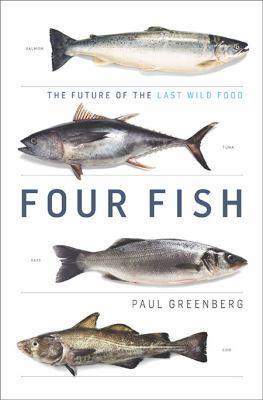
Four Fish: The Future of the Last Wild Food by Paul Greenberg
Our relationship with the ocean is undergoing a profound transformation. Whereas just three decades ago nearly everything we ate from the sea was wild, rampant overfishing combined with an unprecedented bio-tech revolution has brought us to a point where wild and farmed fish occupy equal parts of a complex and confusing marketplace. We stand at the edge of a cataclysm; there is a distinct possibility that our children’s children will never eat a wild fish that has swum freely in the sea. In Four Fish, award-winning writer and lifelong fisherman Paul Greenberg takes us on a culinary journey, exploring the history of the fish that dominate our menus—salmon, sea bass, cod and tuna-and examining where each stands at this critical moment in time. He visits Norwegian mega farms that use genetic techniques once pioneered on sheep to grow millions of pounds of salmon a year. He travels to the ancestral river of the Yupik Eskimos to see the only Fair Trade certified fishing company in the world. He investigates the way PCBs and mercury find their way into seafood; discovers how Mediterranean sea bass went global; Challenges the author of Cod to taste the difference between a farmed and a wild cod; and almost sinks to the bottom of the South Pacific while searching for an alternative to endangered bluefin tuna. Fish, Greenberg reveals, are the last truly wild food – for now. By examining the forces that get fish to our dinner tables, he shows how we can start to heal the oceans and fight for a world where healthy and sustainable seafood is the rule rather than the exception.
Bottomfeeder; How to Eat Ethically in a World of Vanishing Seafood by Taras Grescoe
Dividing his sensibilities between Epicureanism and ethics, Taras Grescoe set out on a nine-month, worldwide search for a delicious–and humane–plate of seafood. What he discovered shocked him. From North American Red Lobsters to fish farms and research centers in China, Bottomfeeder takes readers on an illuminating tour through the $55-billion-dollar-a-year seafood industry. Grescoe examines how out-of-control pollution, unregulated fishing practices, and climate change affect what ends up on our plate. More than a screed against a multibillion-dollar industry, however, this is also a balanced and practical guide to eating, as Grescoe explains to readers which fish are best for our environment, our seas, and our bodies. At once entertaining and illuminating, Bottomfeeder is a thoroughly enjoyable look at the world’s cuisines and an examination of the fishing and farming practices we too easily take for granted.
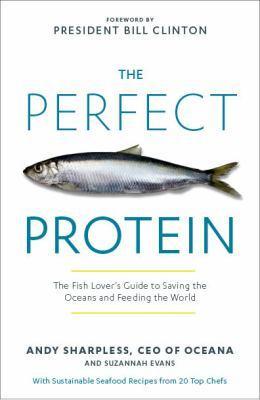
The Perfect Protein: The Fish Lover’s Guide to Saving the Oceans and Feeding the World by Andy Sharpless and Suzannah Evans
The planet will be home to more than 9 billion people by 2050, and we’re already seeing critical levels of famine around the world mirrored by growing obesity in developed nations. Andy Sharpless, CEO of Oceana, maintains that protecting wild seafood can help combat both issues, because seafood is the healthiest, cheapest, most environmentally friendly source of protein on earth. While the conservation community has taken a simplistic, save-the-whales approach when it comes to oceans, Sharpless contends that we must save the world’s seafood not just to protect marine life and biodiversity but to stave off the coming humanitarian crisis. With high demand for predator species like tuna and salmon, wealthy nations like the U.S. convert “reduction” species such as anchovies, mackerel, and sardines into feed for salmon and other farmed animals–even though these overlooked fish are packed with health-boosting Omega-3 fatty acids and could feed millions. By establishing science-based quotas, protecting wild habitats, and reducing bycatch (and treating anchovies and their like as food, not feed), Sharpless believes that effective ocean stewardship can put healthy, sustainable seafood on the table forever. To that end, Oceana has tapped 20-plus chefs, including Mario Batali, Eric Ripert, and Jose Andres for recipes that give us all a role to play in this revolutionary mission: to save the fish so that we can eat more fish.
American Catch: The Fight For Our Local Seafood by Paul Greenberg
Author Paul Greenberg uncovers the tragic unraveling of the nation’s seafood supply–telling the surprising story of why Americans stopped eating from their own waters. In 2005, the United States imported nearly twice as much seafood as twenty years earlier. Bizarrely, during that same period, our seafood exports quadrupled. Greenberg examines New York oysters, Gulf shrimp, and Alaskan salmon to reveal how this came to be. Following the trail of environmental desecration, Greenberg comes to view the New York City oyster as a reminder of what is lost when local waters are not valued as a food source. A different kind of catastrophe threatens the Gulf of Mexico: Asian-farmed shrimp have flooded the American market. Finally, a proposed mining project could undermine the spawning grounds of the biggest wild sockeye salmon run left in the world. In his search to discover why this precious resource isn’t better protected, Greenberg finds the great majority of Alaskan salmon is exported. Sockeye salmon is one of the most nutritionally dense animal proteins on the planet, yet Americans are shipping it abroad. But despite the challenges, hope abounds: many are working to break the current destructive patterns of consumption and return American catch to American tables.
The Omega Principle: Seafood and the Quest for a Long Life and a Healthier Planet by Paul Greenberg
Omega-3 fatty acids have long been celebrated by doctors and dieticians as key to a healthy heart and a sharper brain. In the last few decades, that promise has been encapsulated in one of America’s most popular dietary supplements. Omega-3s are today a multi-billion dollar business, and sales are still growing apace–even as recent medical studies caution that the promise of omega-3s may not be what it first appeared. But a closer look at the omega-3 sensation reveals something much deeper and more troubling. The miracle pill is only the latest product of the reduction industry, a vast, global endeavor that over the last century has boiled down trillions of pounds of marine life into animal feed, fertilizer, margarine, and dietary supplements. The creatures that are the victims of that industry seem insignificant to the untrained eye, but turn out to be essential to the survival of whales, penguins, and fish of all kinds, including many that we love to eat. Behind these tiny molecules is a big story: of the push-and-pull of science and business; of the fate of our oceans in a human-dominated age; of the explosion of land food at the expense of healthier and more sustainable seafood; of the human quest for health and long life at all costs. James Beard Award-winning author Paul Greenberg probes the rich and surprising history of omega-3s–from the dawn of complex life, when these compounds were first formed; to human prehistory, when the discovery of seafood may have produced major cognitive leaps for our species; and on to the modern era, when omega-3s may point the way to a bold new direction for our food system. With wit and boundless curiosity, Greenberg brings us along on his travels–from Peru to Antarctica, from the Canary Islands to the Amalfi Coast–to reveal firsthand the practice and repercussions of our unbalanced way of eating.