
 Donate
If you’re doing summer reading bingo and having a hard time filling the “book covers with famous paintings” square here are some suggestions. If you browse the paperback section for classics they often have cover art featuring paintings. Searching the online catalog for books about your favorite artist will also turn up great books to read.
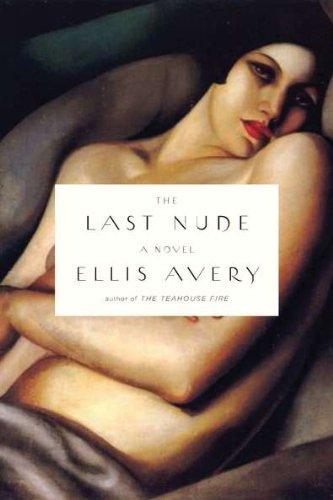



The Last Nude by Ellis Avery Paris, 1927. In the heady years before the crash, financiers drape their mistresses in Chanel, while expatriates flock to the avant-garde bookshop Shakespeare and Company. One day in July, a young American named Rafaela Fano gets into the car of a coolly dazzling stranger, the Art Deco painter Tamara de Lempicka. Struggling to halt a downward slide toward prostitution, Rafaela agrees to model for the artist, a dispossessed Saint Petersburg aristocrat with a murky past. The two become lovers, and Rafaela inspires Tamara’s most iconic Jazz Age images, among them her most accomplished—and coveted—works of art. A season as the painter’s muse teaches Rafaela some hard lessons: Tamara is a cocktail of raw hunger and glittering artifice. And all the while, their romantic idyll is threatened by history’s darkening tide.
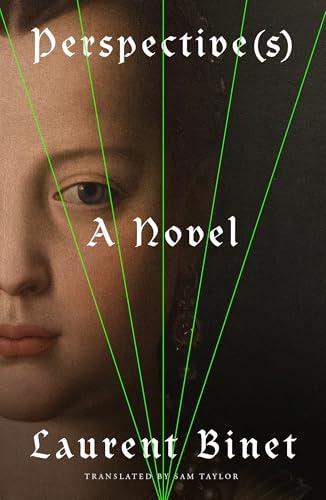
Perspective(s): A Novel by Laurent Binet As dawn breaks over the city of Florence on New Year’s Day 1557, Jacopo da Pontormo is discovered lying on the floor of a church, stabbed through the heart. Above him are the frescoes he labored over for more than a decade–masterpieces all, rivaling the works of Michelangelo in the Sistine Chapel. When guards search his quarters, they find an obscene painting of Venus and Cupid–with the face of Venus replaced by that of Maria de’ Medici, the Duke of Florence’s oldest daughter. The city erupts in chaos. Who could have committed these crimes: murder and lèse-majesté? Giorgio Vasari, the great art historian, is picked to lead the investigation. Letters start to fly back and forth–between Maria and her aunt Catherine de’ Medici, the queen of France; between Catherine and the scheming Piero Strozzi; and between Vasari and Michelangelo–carrying news of political plots and speculations about the identity of Pontormo’s killer. The truth, when it comes to light, is as shocking as the bold new artworks that have made Florence the red-hot center of European art and intrigue.
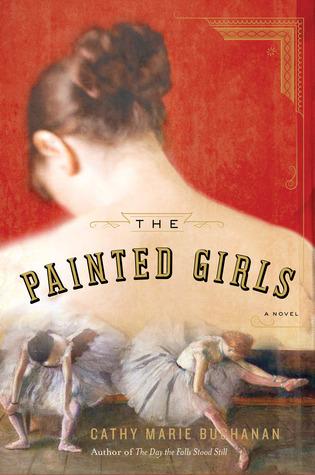
The Painted Girls by Cathy Marie Buchanan 1878 Paris. Following their father’s sudden death, the van Goethem sisters find their lives upended. Without his wages, and with the small amount their laundress mother earns disappearing into the absinthe bottle, eviction from their lodgings seems imminent. With few options for work, Marie is dispatched to the Paris Opéra, where for a scant seventeen francs a week, she will be trained to enter the famous ballet. Her older sister, Antoinette, finds work as an extra in a stage adaptation of Émile Zola’s naturalist masterpiece L’Assommoir. Marie throws herself into dance and is soon modeling in the studio of Edgar Degas, where her image will forever be immortalized as Little Dancer Aged Fourteen. There she meets a wealthy male patron of the ballet, but might the assistance he offers come with strings attached? Meanwhile Antoinette, derailed by her love for the dangerous Émile Abadie, must choose between honest labor and the more profitable avenues open to a young woman of the Parisian demimonde.
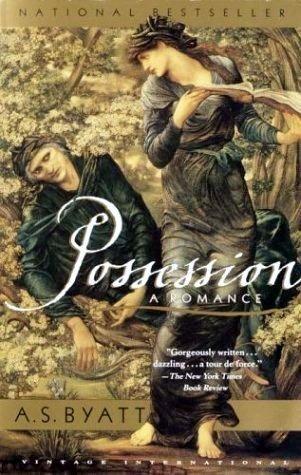
Possession: A Romance by A. S. Byatt “Literary critics make natural detectives,” says Maud Bailey, heroine of a mystery where the clues lurk in university libraries, old letters, and dusty journals. Together with Roland Michell, a fellow academic and accidental sleuth, Maud discovers a love affair between the two Victorian writers the pair has dedicated their lives to studying: Randolph Ash, a literary great long assumed to be a devoted and faithful husband, and Christabel La Motte, a lesser-known “fairy poetess” and chaste spinster. At first, Roland and Maud’s discovery threatens only to alter the direction of their research, but as they unearth the truth about the long-forgotten romance, their involvement becomes increasingly urgent and personal. Desperately concealing their purpose from competing researchers, they embark on a journey that pulls each of them from solitude and loneliness, challenges the most basic assumptions they hold about themselves, and uncovers their unique entitlement to the secret of Ash and La Motte’s passion.
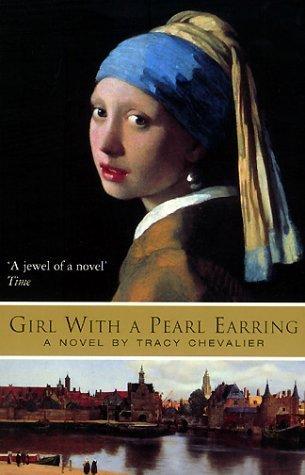
Girl With a Pearl Earring by Tracy Chevalier In seventeenth-century Delft, there’s a strict social order -rich and poor, Catholic and Protestant, master and servant -and all know their place. When Griet becomes a maid in the household of the painter Johannes Vermeer, she thinks she knows her role: housework, laundry, and the care of his six children. She even feels able to handle his shrewd mother-in-law; his restless, sensual wife; and their jealous servant. What no one expects is that Griet’s quiet manner, quick perceptions, and fascination with her master’s paintings will draw her inexorably into his world. Their growing intimacy sparks whispers; and when Vermeer paints her wearing his wife’s pearl earrings, the gossip escalates into a full-blown scandal that irrevocably changes Griet’s life.Written with the precision and focus of an Old Master painting, Girl With a Pearl Earring is a vivid portrait of colorful seventeenth-century Delft, as well as the hauntingly poignant story of one young girl’s rite of passage.
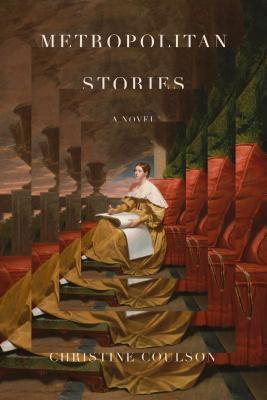
Metropolitan Stories: A Novel by Christine Coulson Hidden behind the Picassos and Vermeers, the Temple of Dendur and the American Wing, exists another world: the hallways and offices, conservation studios, storerooms, and cafeteria that are home to the museum’s devoted and peculiar staff of 2,200 people–along with a few ghosts. A surreal love letter to this private side of the Met, Metropolitan Stories unfolds in a series of amusing and poignant vignettes in which we discover larger-than-life characters, the downside of survival, and the powerful voices of the art itself. The result is a novel bursting with magic, humor, and energetic detail, but also a beautiful book about introspection, an ode to lives lived for art, ultimately building a powerful collage of human experience and the world of the imagination.
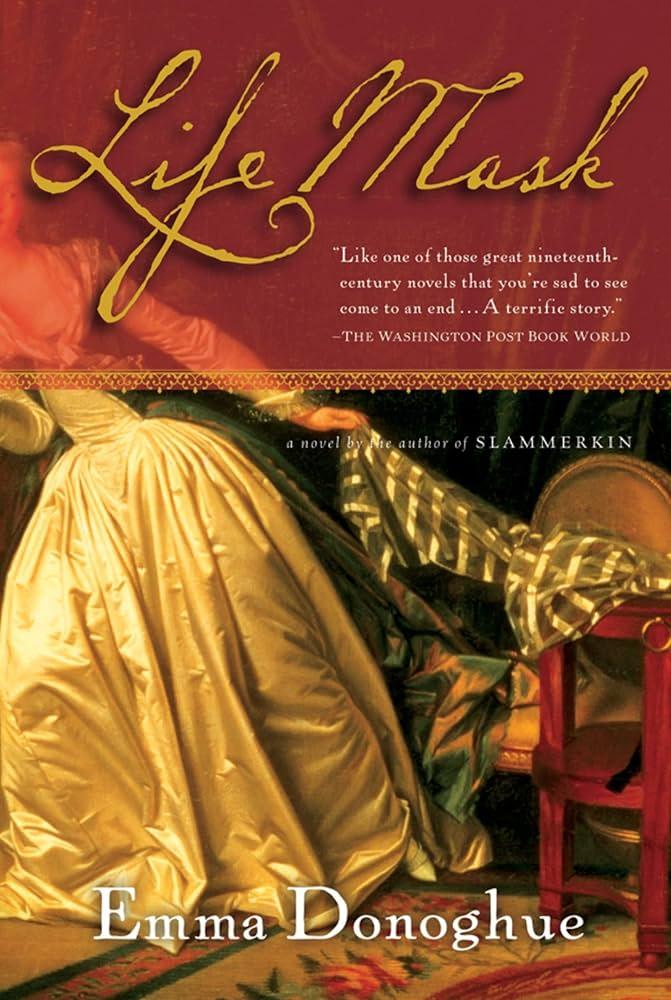
Life Mask by Emma Donoghue Lord Derby, unhappily married and the inventor of the horse race that bears his name, is the steadfast suitor of England’s leading comedy star, Eliza Farren. When the working-class actress begins a deep friendship with the aristocratic widow Anne Damer, a sculptor and rumoured Sapphist, the consequent scandal threatens to topple Eliza from her precarious position and destroy the lives of all three. In an England overshadowed by the French Revolution, shaken by terrorism and a repressive government, Emma Donoghue leads her characters in an intricate minuet of public ambition and private passion. In the Houses of Parliament, on the stage, in the bedroom, at the race track and in the intimate salons of the Beau Monde, Life Mask brings to life a world where political liaisons prove just as dangerous as erotic ones.
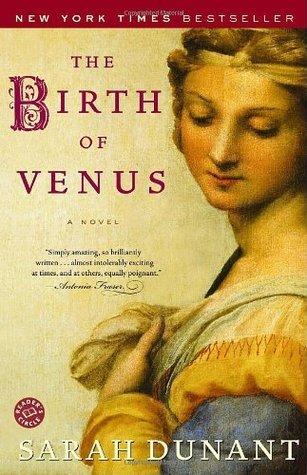
The Birth of Venus by Sarah Dunant Alessandra Cecchi is not quite fifteen when her father, a prosperous cloth merchant, brings a young painter back from northern Europe to decorate the chapel walls in the family’s Florentine palazzo. A child of the Renaissance, with a precocious mind and a talent for drawing, Alessandra is intoxicated by the painter’s abilities. But their burgeoning relationship is interrupted when Alessandra’s parents arrange her marriage to a wealthy, much older man. Meanwhile, Florence is changing, increasingly subject to the growing suppression imposed by the fundamentalist monk Savonarola, who is seizing religious and political control. Alessandra and her native city are caught between the Medici state, with its love of luxury, learning, and dazzling art, and the hellfire preaching and increasing violence of Savonarola’s reactionary followers. Played out against this turbulent backdrop, Alessandra’s married life is a misery, except for the surprising freedom it allows her to pursue her powerful attraction to the young painter and his art. The Birth of Venus is a tour de force, the first historical novel from one of Britain’s most innovative writers of literary suspense. It brings alive the history of Florence at its most dramatic period, telling a compulsively absorbing story of love, art, religion, and power through the passionate voice of Alessandra, a heroine with the same vibrancy of spirit as her beloved city.
The Name of the Rose by Umberto Eco The year is 1327. Franciscans in a wealthy Italian abbey are suspected of heresy, and Brother William of Baskerville arrives to investigate. His delicate mission is suddenly overshadowed by seven bizarre deaths that take place in seven days and night of apocalyptic terror. The body of one monk is found in a cask of pigs’ blood, another is floating in a bathhouse, still another is crushed at the foot of a cliff. Brother William turns detective, and a uniquely deft one at that. His tools are the logic of Aristotle, the theology of Aquinas, the empirical insights of Roger Bacon – all sharpened to a glistening edge by his wry humor and ferocious curiosity. He collects evidence, deciphers secret symbols and coded manuscripts, and digs into the eerie labyrinth of the abbey, where “the most interesting things happen at night.” As Brother William goes about unraveling the mystery of what happens at the abbey by day and by night, readers step into a brilliant re-creation of the fourteenth century, with its herbal smells and dazzling architectural sights, its dark superstitions and wild prejudices, its hidden passions and sordid intrigues.
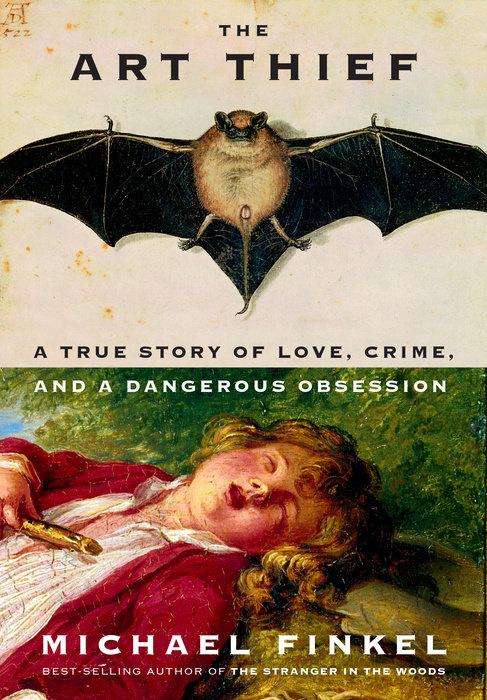
The Art Thief: A True Story of Love, Crime, and a Dangerous Obsession by Michael Finkel For centuries, works of art have been stolen in countless ways from all over the world, but no one has been quite as successful at it as the master thief Stéphane Breitwieser. Carrying out more than two hundred heists over nearly eight years—in museums and cathedrals all over Europe—Breitwieser, along with his girlfriend who worked as his lookout, stole more than three hundred objects, until it all fell apart in spectacular fashion. In The Art Thief, Michael Finkel brings us into Breitwieser’s strange and fascinating world. Unlike most thieves, Breitwieser never stole for money. Instead, he displayed all his treasures in a pair of secret rooms where he could admire them to his heart’s content. Possessed of a remarkable athleticism and an innate ability to circumvent practically any security system, Breitwieser managed to pull off a breathtaking number of audacious thefts. Yet these strange talents bred a growing disregard for risk and an addict’s need to score, leading Breitwieser to ignore his girlfriend’s pleas to stop—until one final act of hubris brought everything crashing down. This is a riveting story of art, crime, love, and an insatiable hunger to possess beauty at any cost.
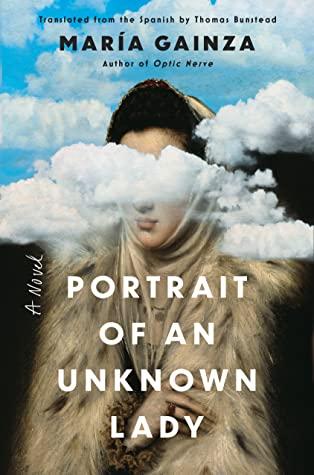
Portrait of an Unknown Lady: A Novel by María Gainza In the Buenos Aires art world, a master forger has achieved legendary status. Rumored to be a woman, she seems especially gifted at forging canvases by the painter Mariette Lydis, a portraitist of Argentine high society. But who is this absurdly gifted creator of counterfeits? What motivates her? And what is her link to the community of artists who congregate, night after night, in a strange establishment called the Hotel Melancólico? On the trail of this mysterious forger is our narrator, an art critic and auction house employee through whose hands counterfeit works have passed. As she begins to take on the role of art-world detective, adopting her own methods of deception and manipulation, she warns us “not to proceed in expectation of names, numbers or dates… My techniques are those of the impressionist.” What follows is a highly seductive and enveloping meditation on what we mean by “authenticity” in art, and a captivating exploration of the gap between what is lived and what is told. Portrait of an Unknown Lady is, like any great work, driven by obsession and full of subtle surprise
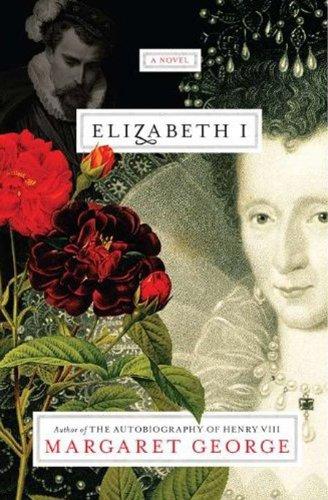
Elizabeth I: A Novel by Margaret George One of today’s premier historical novelists, Margaret George dazzles here as she tackles her most difficult subject the legendary Elizabeth Tudor, queen of enigma-the Virgin Queen who had many suitors, the victor of the Armada who hated war; the gorgeously attired, jewel- bedecked woman who pinched pennies. England’s greatest monarch has baffled and intrigued the world for centuries. But what was she really like? In this novel, her flame-haired, lookalike cousin, Lettice Knollys, thinks she knows all too well. Elizabeth’s rival for the love of Robert Dudley, Earl of Leicester, and mother to the Earl of Essex, the mercurial nobleman who challenged Elizabeth’s throne, Lettice had been intertwined with Elizabeth since childhood. This is a story of two women of fierce intellect and desire, one trying to protect her country, and throne, the other trying to regain power and position for her family and each vying to convince the reader of her own private vision of the truth about Elizabeth’s character. Their gripping drama is acted out at the height of the flowering of the Elizabethan age. Shakespeare, Marlowe, Dudley, Raleigh, Drake-all of them swirl through these pages as they swirled through the court and on the high seas.
The Portrait of a Mirror: A Novel by A. Natasha Joukovsky Wes and Diana are the kind of privileged, well-educated, self-involved New Yorkers you may not want to like but can’t help wanting to like you. With his boyish good looks, blue-blood pedigree, and the recent tidy valuation of his tech startup, Wes would have made any woman weak in the knees-any woman, that is, except perhaps his wife. Brilliant to the point of cunning, Diana possesses her own arsenal of charms, handily deployed against Wes in their constant wars of will and rhetorical sparring. Vivien and Dale live in Philadelphia, but with ties to the same prep schools and management consulting firms as Wes and Diana, they’re of the same ilk. With a wedding date on the horizon and carefully curated life of coupledom, Vivien and Dale make a picture-perfect pair on Instagram. But when Vivien becomes a visiting curator at The Metropolitan Museum of Art just as Diana is starting a new consulting project in Philadelphia, the two couples’ lives cross and tangle. It’s the summer of 2015 and they’re all enraptured by one another and too engulfed in desire to know what they want-despite knowing just how to act. In this wickedly fun debut, A. Natasha Joukovsky crafts an absorbing portrait of modern romance, rousing real sympathy for these flawed characters even as she skewers them. Shrewdly observed, whip-smart, and shot through with wit and good humor, The Portrait of a Mirror is a piercing exploration of narcissism, desire, self-delusion, and the great mythology of love.
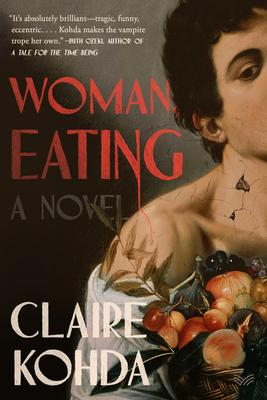
Woman, Eating: A Novel by Claire Kohda Lydia is hungry. She’s always wanted to try Japanese food. Sashimi, ramen, onigiri with sour plum stuffed inside – the food her Japanese father liked to eat. And then there is bubble tea and iced-coffee, ice cream and cake, and foraged herbs and plants, and the vegetables grown by the other young artists at the London studio space she is secretly squatting in. But, Lydia can’t eat any of these things. Her body doesn’t work like those of other people. The only thing she can digest is blood, and it turns out that sourcing fresh pigs’ blood in London – where she is living away from her vampire mother for the first time – is much more difficult than she’d anticipated. Then there are the humans – the other artists at the studio space, the people at the gallery she interns at, the strange men that follow her after dark, and Ben, a boyish, goofy-grinned artist she is developing feelings for. Lydia knows that they are her natural prey, but she can’t bring herself to feed on them. In her windowless studio, where she paints and studies the work of other artists, binge-watches Buffy the Vampire Slayer and videos of people eating food on YouTube and Instagram, Lydia considers her place in the world. She has many of the things humans wish for – perpetual youth, near-invulnerability, immortality – but she is miserable; she is lonely; and she is hungry – always hungry. As Lydia develops as a woman and an artist, she will learn that she must reconcile the conflicts within her – between her demon and human sides, her mixed ethnic heritage, and her relationship with food, and, in turn, humans – if she is to find a way to exist in the world. Before any of this, however, she must eat.
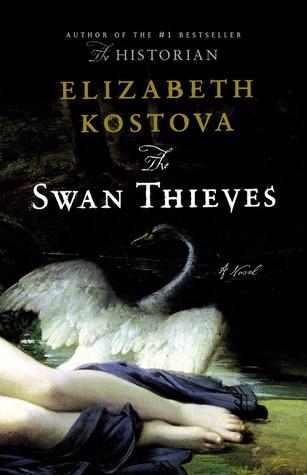
The Swan Thieves: A Novel by Elizabeth Kostova Psychiatrist Andrew Marlowe, devoted to his profession and the painting hobby he loves, has a solitary but ordered life. When renowned painter Robert Oliver attacks a canvas in the National Gallery of Art and becomes his patient, Marlow finds that order destroyed. Desperate to understand the secret that torments the genius, he embarks on a journey that leads him into the lives of the women closest to Oliver and a tragedy at the heart of French Impressionism.
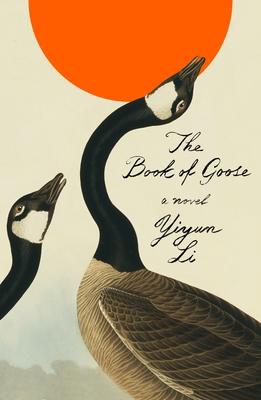
The Book of Goose by Yiyun Li Fabienne is dead. Her childhood best friend, Agnès, receives the news in America, far from the French countryside where the two girls were raised–the place that Fabienne helped Agnès escape ten years ago. Now Agnès is free to tell her story. As children in a war-ravaged backwater town, they’d built a private world, invisible to everyone but themselves–until Fabienne hatched the plan that would change everything, launching Agnès on an epic trajectory through fame, fortune, and terrible loss.
Friends of the Museum: A Novel by Heather McGowan When Diane Schwebe, the director of a major New York museum, is awakened in the early morning by a text message from the museum’s lawyer, it is the start of a twenty-four hour roller-coaster ride. Diane has sacrificed many things in her life to help the fading institution stave off irrelevance and financial ruin. In this battle, she’s surrounded by her stalwart supporters: her enigmatic and tireless personal assistant, Chris; the museum’s trusty head of security, Shay; and its general counsel, Henry–a man whose ability to weasel his way out of a jam is matched only by his capacity to avoid learning anything from the experience. Orbiting Diane is a motley assortment of museum employees, each on the precipice of collapse or revelation: among them a line cook staring down a huge opportunity he’s not sure he wants; a costume curator stuck in an inescapable rut; and the ambivalent curator of the museum’s film program, whose first day on the job might very well be his last. On this day of the museum’s annual gala, every plate that Diane has kept spinning will fall and by daybreak, someone will be dead.
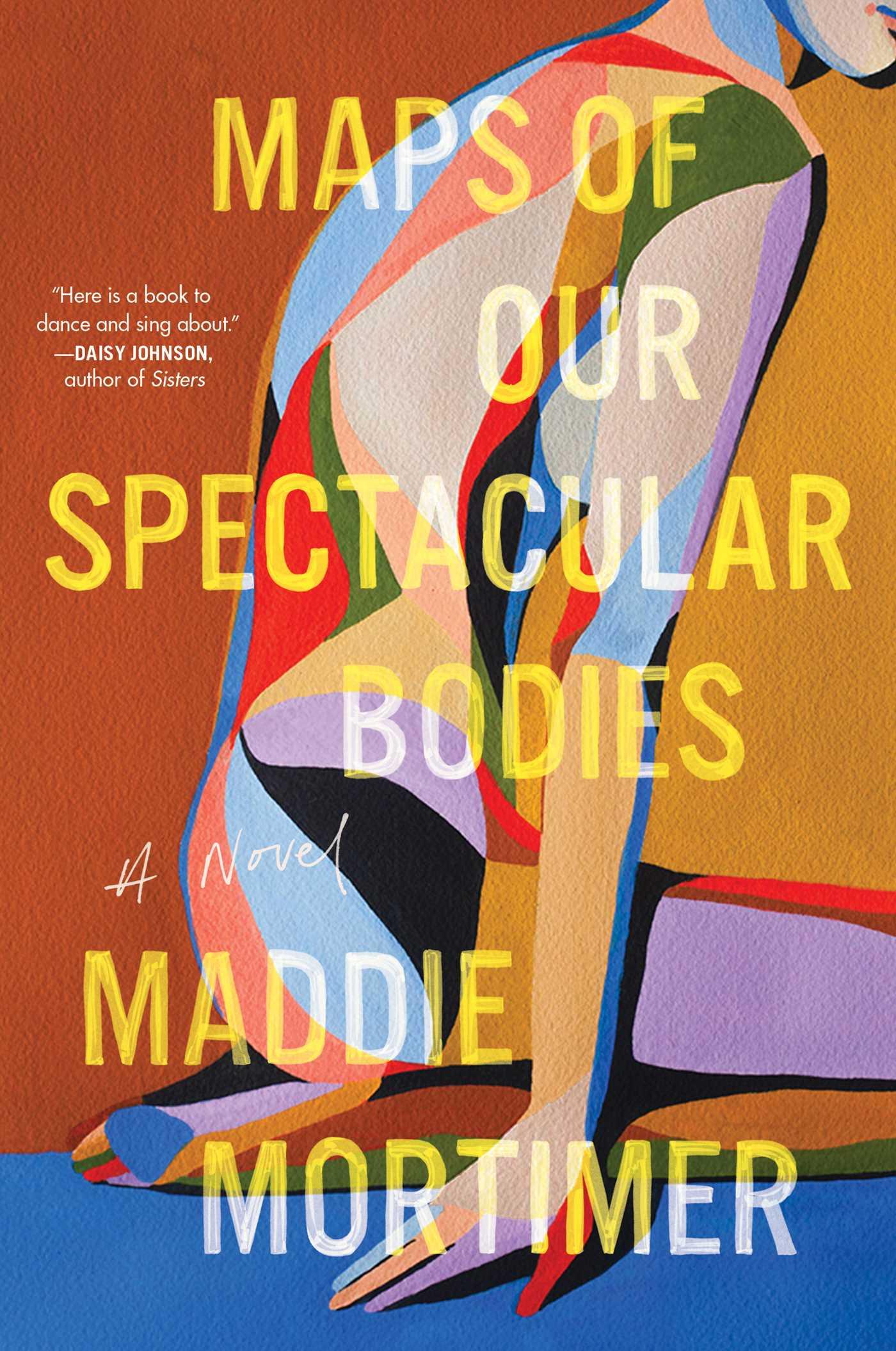
Maps of Our Spectacular Bodies by Maddie Mortimer Lia, her husband Harry, and their beloved daughter, Iris, are a precisely balanced family of three. With Iris struggling to navigate the social tightrope of early adolescence, their tender home is a much-needed refuge. But when a sudden diagnosis threatens to derail each of their lives, the secrets of Lia’s past come rushing into the present, and the world around them begins to transform. Deftly guided through time, we discover the people who shaped Lia’s youth; from her deeply religious mother to her troubled first love. In turn, each will take their place in the shifting landscape of Lia’s body; at the center of which dances a gleeful narrator, learning her life from the inside, growing more emboldened by the day. Pivoting between the domestic and the epic, the comic and the heart-breaking, this astonishing novel unearths the darkness and levity of one woman’s life to symphonic effect.
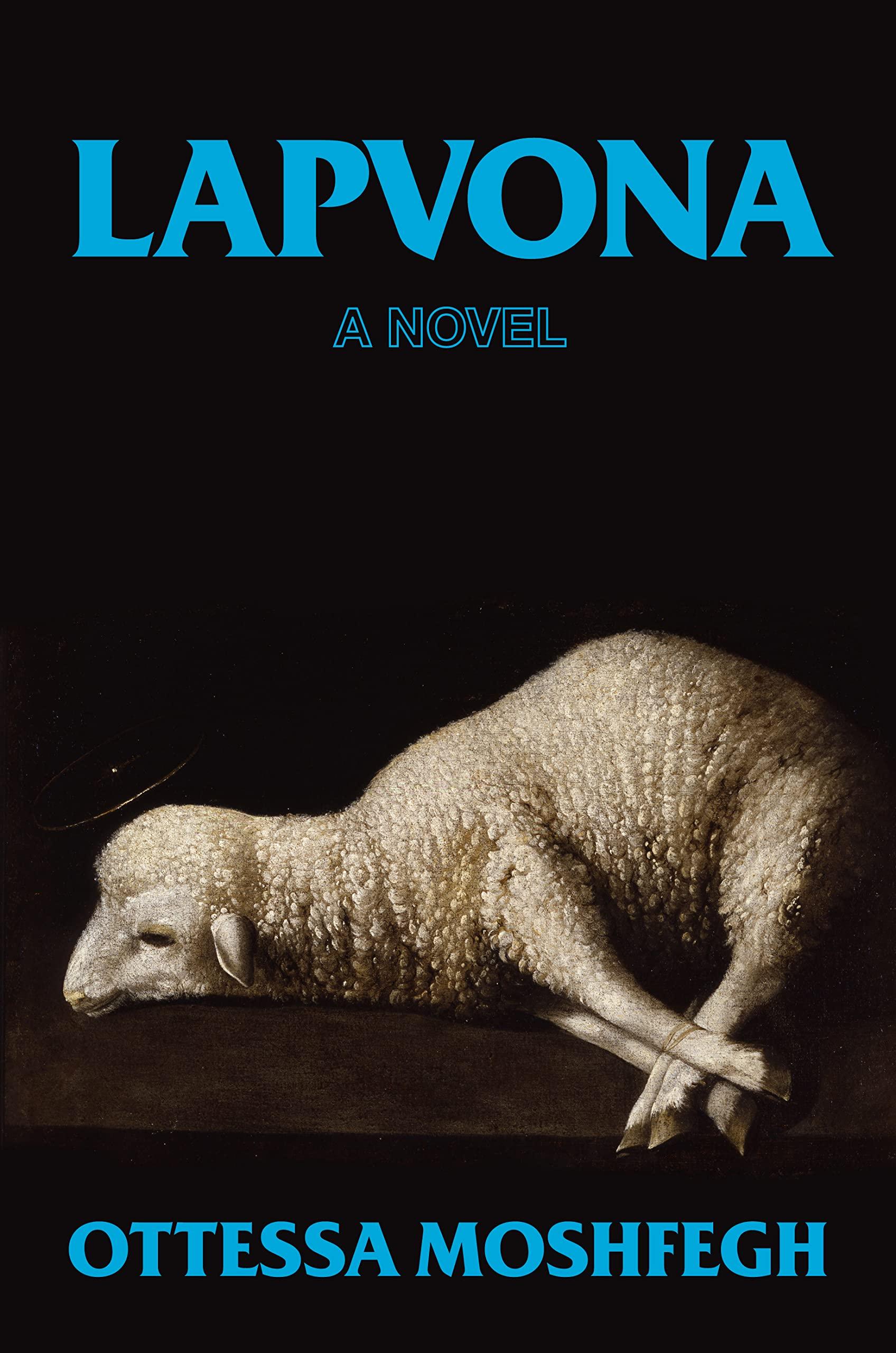
Lapvona by Ottessa Moshfegh Little Marek, the abused and delusional son of the village shepherd, never knew his mother; his father told him she died in childbirth. One of life’s few consolations for Marek is his enduring bond with the blind village midwife, Ina, who suckled him as a baby, as she did so many of the village’s children. Ina’s gifts extend beyond childcare: she possesses a unique ability to communicate with the natural world. Her gift often brings her the transmission of sacred knowledge on levels far beyond those available to other villagers, however religious they might be. For some people, Ina’s home in the woods outside of the village is a place to fear and to avoid, a godless place. Among their number is Father Barnabas, the town priest and lackey for the depraved lord and governor, Villiam, whose hilltop manor contains a secret embarrassment of riches. The people’s desperate need to believe that there are powers that be who have their best interests at heart is put to a cruel test by Villiam and the priest, especially in this year of record drought and famine. But when fate brings Marek into violent proximity to the lord’s family, new and occult forces upset the old order. By year’s end, the veil between blindness and sight, life and death, the natural world and the spirit world, civility and savagery, will prove to be very thin indeed.
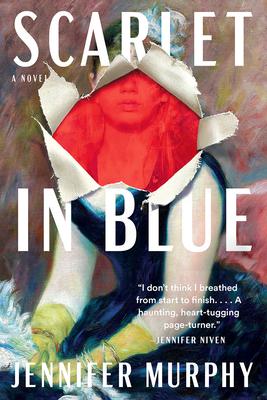
Scarlet in Blue by Jennifer Murphy Fifteen-year-old Blue Lake is a budding pianist who resents her mother Scarlet’s nomadic lifestyle. She yearns to settle in one place so she can live a normal life and play her music. But Scarlet, a talented painter, is on the run from a phantom man. A man she insists is chasing them. A man who means to kill them. Blue has never seen this man and questions whether Scarlet, who is slowly going mad, has hallucinated him. It isn’t until 1968, when they arrive in the small beach-front town of South Haven, Michigan, that Blue’s wishes begin to come true. She makes a good friend, falls in love, and can finally play piano. Everything seems to be going fine-until Scarlet kills the man she believes has been hunting them. Forty-six years later, Blue, now a pianist for the Chicago Symphony Orchestra, is leaving practice for her lunch-time walk past the Art Institute when she’s startled by the announcement of a new exhibit. Highlighting the effects of chemistry on Impressionist masterpieces, the exhibit triggers memories of her mother and the long ago murder. Memories that Blue has spent a lifetime trying to forget. Told through the alternating voices of Blue, Scarlet, and Scarlet’s psychoanalyst, Henry, Scarlet In Blue is a story of a mother and daughter’s enduring love, the ramifications of past abuse, and the art that holds their lives together.
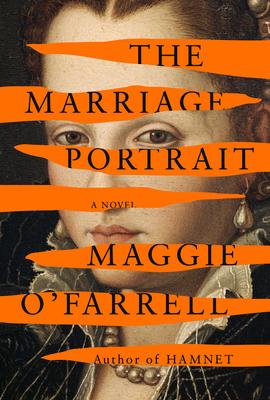
The Marriage Portrait by Maggie O’Farrell Florence, the 1550s. Lucrezia, third daughter of the grand duke, is comfortable with her obscure place in the palazzo: free to wonder at its treasures, observe its clandestine workings, and devote herself to her own artistic pursuits. But when her older sister dies on the eve of her wedding to the ruler of Ferrara, Modena and Reggio, Lucrezia is thrust unwittingly into the limelight: the duke is quick to request her hand in marriage, and her father just as quick to accept on her behalf. Having barely left girlhood behind, Lucrezia must now enter an unfamiliar court whose customs are opaque and where her arrival is not universally welcomed. Perhaps most mystifying of all is her new husband himself, Alfonso. Is he the playful sophisticate he appeared to be before their wedding, the aesthete happiest in the company of artists and musicians, or the ruthless politician before whom even his formidable sisters seem to tremble? As Lucrezia sits in constricting finery for a painting intended to preserve her image for centuries to come, one thing becomes worryingly clear. In the court’s eyes, she has one duty: to provide the heir who will shore up the future of the Ferranese dynasty. Until then, for all of her rank and nobility, the new duchess’s future hangs entirely in the balance. Full of the beauty and emotion with which she illuminated the Shakespearean canvas of Hamnet , Maggie O’Farrell turns her talents to Renaissance Italy in an extraordinary portrait of a resilient young woman’s battle for her very survival.
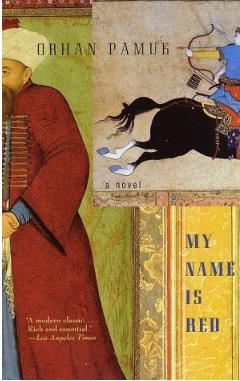
My Name Is Red by Orhan Pamuk When the Sultan commissions a great book to celebrate his royal self and his extensive dominion, he directs Enishte Effendi to assemble a cadre of the most acclaimed artists in the land. Their task: to illuminate the work in the European style. But because figurative art can be deemed an affront to Islam, this commission is a dangerous proposition indeed, and no one in the elite circle can know the full scope or nature of the project. Panic erupts when one of the chosen miniaturists disappears, and the Sultan demands answers within three days. The only clue to the mystery–or crime?–lies in the half-finished illuminations themselves. Has an avenging angel discovered the blasphemous work? Or is a jealous contender for the hand of Enishte’s ravishing daughter, the incomparable Shekure, somehow to blame? Orhan Pamuk’s My Name Is Red is at once a fantasy and a philosophical puzzle, a kaleidoscopic journey to the intersection of art, religion, love, sex, and power.
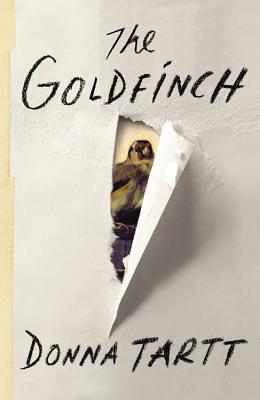
The Goldfinch by Donna Tartt Aged thirteen, Theo Decker, son of a devoted mother and a reckless, largely absent father, survives an accident that otherwise tears his life apart. Alone and rudderless in New York, he is taken in by the family of a wealthy friend. He is tormented by an unbearable longing for his mother, and down the years clings to the thing that most reminds him of her: a small, strangely captivating painting that ultimately draws him into the criminal underworld. As he grows up, Theo learns to glide between the drawing rooms of the rich and the dusty antiques store where he works. He is alienated and in love – and his talisman, the painting, places him at the centre of a narrowing, ever more dangerous circle.
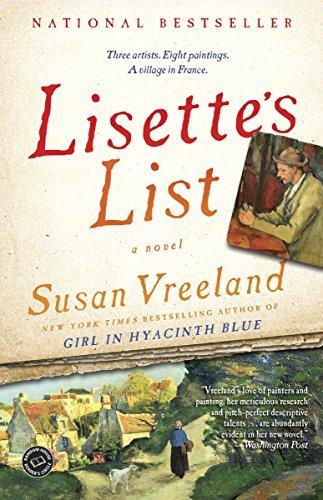
Lisette’s List: A Novel by Susan Vreeland In 1937, young Lisette Roux and her husband, André, move from Paris to a village in Provence to care for André’s grandfather Pascal. Lisette regrets having to give up her dream of becoming a gallery apprentice and longs for the comforts and sophistication of Paris. But as she soon discovers, the hilltop town is rich with unexpected pleasures. Pascal once worked in the nearby ochre mines and later became a pigment salesman and frame maker; while selling his pigments in Paris, he befriended Pissarro and Cézanne, some of whose paintings he received in trade for his frames. Pascal begins to tutor Lisette in both art and life, allowing her to see his small collection of paintings and the Provençal landscape itself in a new light. Inspired by Pascal’s advice to “Do the important things first,” Lisette begins a list of vows to herself (# 4. Learn what makes a painting great ). When war breaks out, André goes off to the front, but not before hiding Pascal’s paintings to keep them from the Nazis’ reach. With German forces spreading across Europe, the sudden fall of Paris, and the rise of Vichy France, Lisette sets out to locate the paintings (#11. Find the paintings in my lifetime ). Her search takes her through the stunning French countryside, where she befriends Marc and Bella Chagall, who are in hiding before their flight to America, and acquaints her with the land, her neighbors, and even herself in ways she never dreamed possible. Through joy and tragedy, occupation and liberation, small acts of kindness and great acts of courage, Lisette learns to forgive the past, to live robustly, and to love again.
Find more books to read on our book recommendations page.